Is surfing in Tamarindo safe? For most people, yes. The main beach breaks over sand, the waves are slow and crumbly, and the water is warm all year, which is why so many people learn to surf here. The risks that actually matter are rip currents and the river mouth at the north end of the beach, where the crocodiles live. Sharks and stingrays come a long way after that, and you can avoid all of them once you know where and when to paddle out.
The short version: surf the middle of the beach, not the river mouth. Learn what a rip current looks like and how to get out of one. Shuffle your feet when you walk in. Don’t surf alone at dawn, at dusk or in brown water after rain. And for your first few sessions, let an instructor read the conditions for you.
We have ranked the risks below by how much they come up in real life, which is not the same order people ask about them in. Almost everyone asks about sharks first. Almost nobody asks about rip currents, and that is the one we deal with.
How Safe Is Tamarindo Compared With Other Surf Spots?
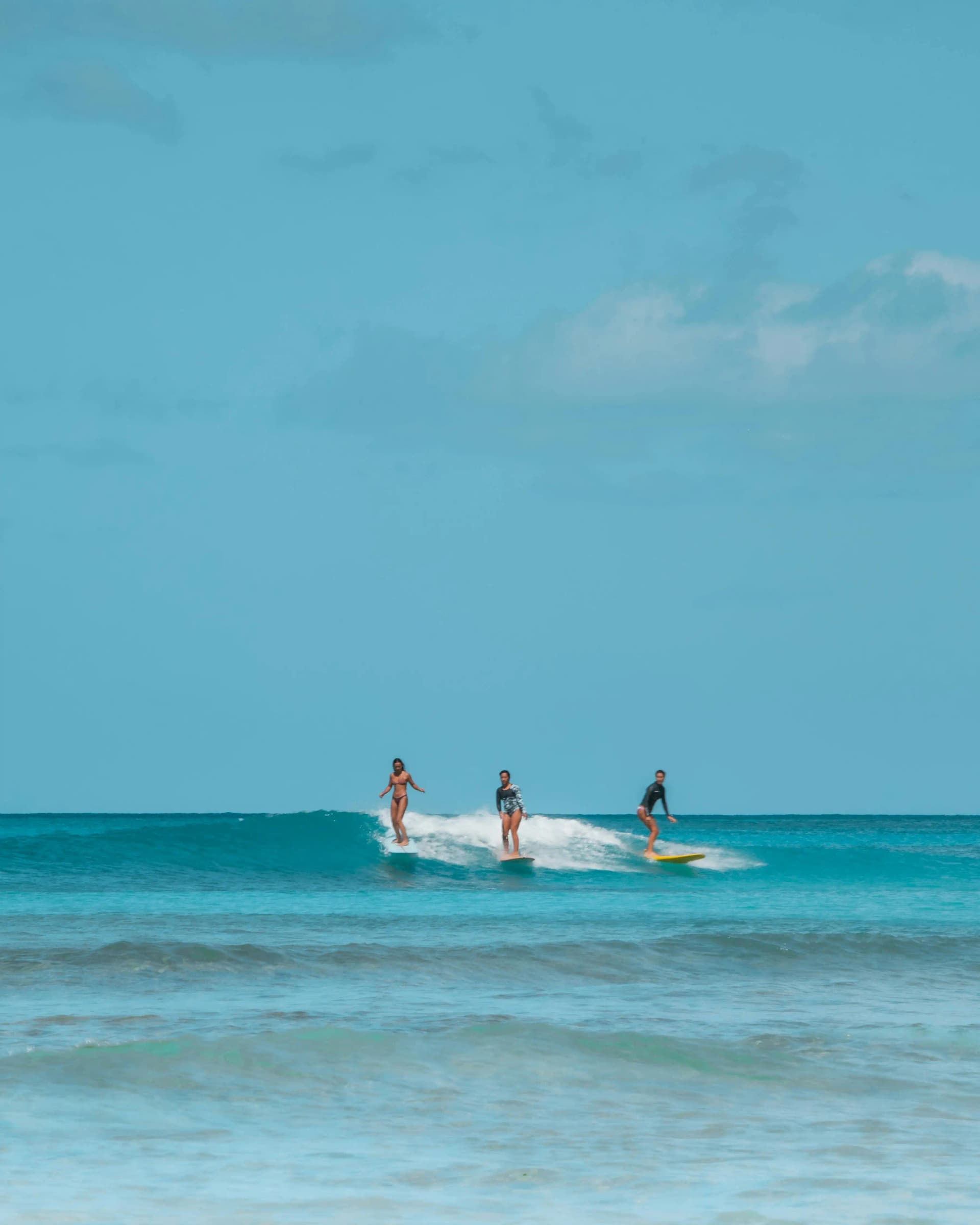
For a beginner, it is one of the gentlest beaches in Costa Rica. You fall into water and soft sand, not onto rock or reef. On the inside of the beach there are long stretches of waist-deep whitewater, and that is exactly where you want to be in your first lessons.
Compare that with a heavy beach break like Playa Hermosa in Jacó, or a reef where the bottom is a few feet under your board. We went through the two towns in Tamarindo vs Jacó for beginner surfers, and on safety alone Tamarindo wins easily.
Gentle is still not risk-free. The ocean here changes with the tide and the swell, and a couple of spots on the beach are worth knowing before you paddle out.
| Risk | How often it matters | Where | How to avoid it |
|---|---|---|---|
| Rip currents | The most common real risk | Near the river mouth, between sandbars, at some tides | Learn to spot them; paddle parallel to shore |
| Crocodiles | Rare at the beach | Tamarindo estuary, north end of the beach | Stay away from the river mouth |
| Stingrays | Now and then | Shallow sandy water | Shuffle your feet as you walk in |
| Sharks | Very rare | Open coast, river mouths | Skip murky water and solo dawn or dusk sessions |
| Sun and heat | Every single day | Everywhere | Reef-safe sunscreen, rash guard, water |
Rip Currents: The Risk That Actually Matters
A rip current is a narrow channel of water running from the beach back out to sea. Every wave pushes water up the beach, and that water has to drain back out through the deepest path it can find. In Tamarindo, rips usually form near the river mouth and in the channels between sandbars. Bigger swell and certain tides make them stronger.
From the beach, look for:
- a darker, calmer gap between patches of breaking waves (it looks like the safest place to swim, which is the problem);
- foam, seaweed or sandy water drifting out to sea instead of toward the beach;
- a narrow strip of choppy water while the water on both sides looks smoother.
If one pulls you out:
- Hold on to your board. It floats, so as long as you have it you are not going under.
- Don’t paddle straight at the beach. Strong swimmers lose that fight too.
- Paddle parallel to the shore until the pull stops. Rips are usually narrower than they look from inside one.
- Come back in with the waves, at an angle, away from the channel.
- If you’re tired, sit up and raise one arm. Everyone on the beach knows what that means.
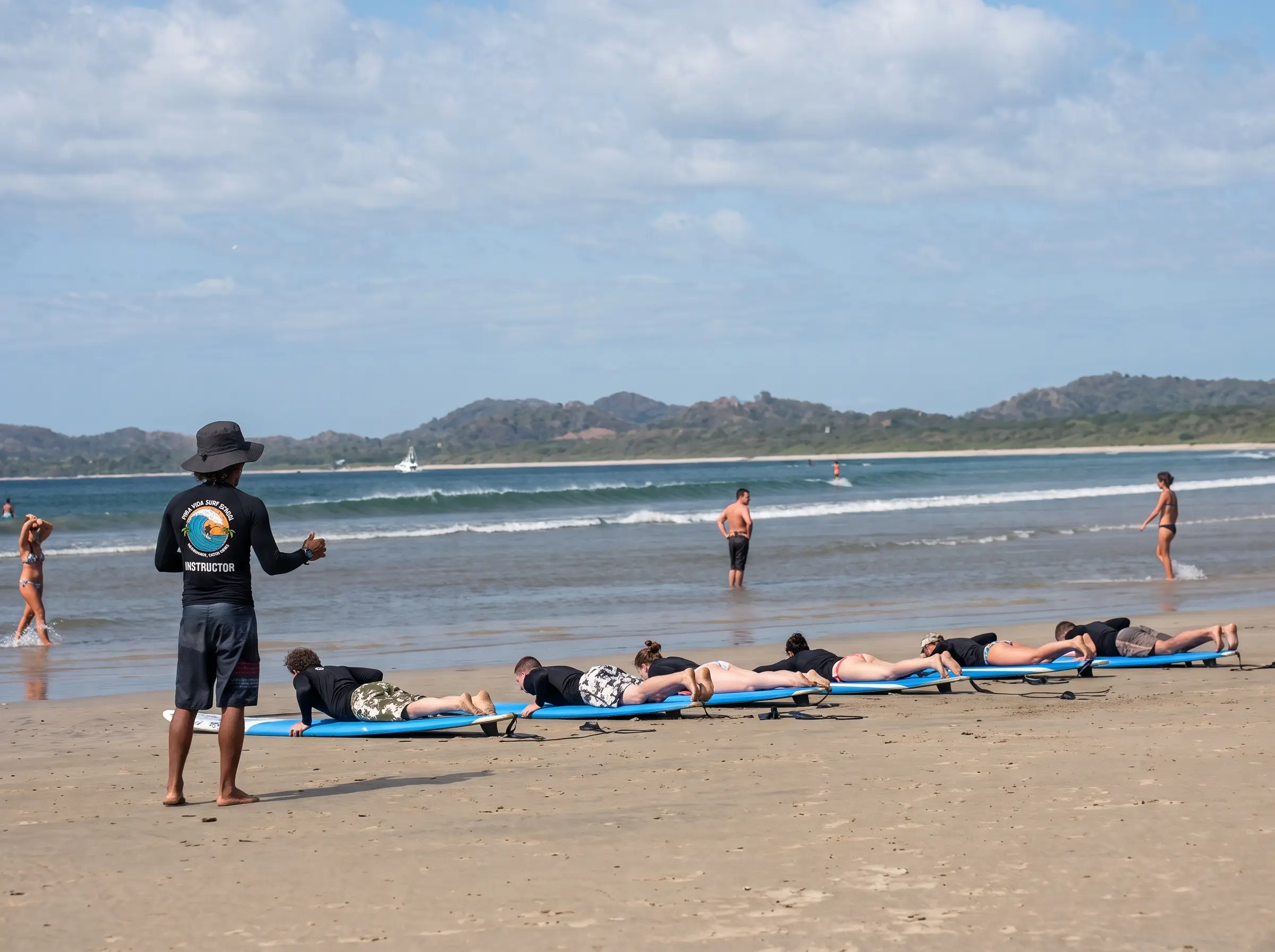
We go through this on the sand before every lesson, even the ones where the ocean looks like a lake. We also choose the part of the beach and the time of day around the tide, so beginners spend the session in whitewater away from the channels. Once you surf on your own, the Tamarindo tide chart has the tides for every day.
Crocodiles in Tamarindo: Where They Are and Where They Are Not
There are crocodiles in Tamarindo. They live in the estuary, not on the beach. The estuary is the river mouth at the north end, where Tamarindo ends and Playa Grande begins. Its mangroves are protected, and American crocodiles live there. A boat tour through them is honestly one of the best things to do in Tamarindo.
Now and then a crocodile swims out of the river mouth and along the coast, and every few years someone photographs one near the beach. It makes the news because it is unusual. The middle and south end of the beach, where we teach, is not where they live.
Our rules for the north end are simple. Don’t surf, swim or wade at the river mouth; the strongest rips form there too, so it is a bad spot twice over. Stay away from that end at dawn, at dusk and after heavy rain, when the water is murky and animals are most active. Read the signs posted near the estuary. And if you want to get to Playa Grande, take the boat taxi instead of walking across.
Are There Sharks in Tamarindo?
Sharks live along the whole Pacific coast of Costa Rica, and shark bites here are rare. A huge number of people surf and swim in Guanacaste every year. You are far more likely to get a bad sunburn or a bump from your own board.
Surfers everywhere follow the same few habits, and they work here too. Avoid river mouths, where murky water full of nutrients brings in fish and whatever eats them. Don’t paddle out in brown water after a big rain. If you’re on your own, skip first and last light and surf when other people are out. Keep away from anyone fishing or cleaning fish.
You may notice these are mostly the same rules as for rips and crocodiles. That’s not a coincidence: the river mouth is the spot to avoid for all three.
Stingrays: Shuffle Your Feet
Stingrays rest in shallow, sandy water, and stepping on one is the most common minor injury on Guanacaste beaches. It hurts a lot. It is rarely serious.
The fix takes no skill at all: shuffle your feet along the bottom as you walk in instead of taking big steps. The rays feel the vibration and swim off. If you do get stung, get out, put the foot in water as hot as you can stand (it really helps with the pain), and see a doctor if it doesn’t settle.
Other Everyday Risks: Sun, Boards and Crowds
The things most likely to ruin your day here are not animals.
The sun is the big one. Tamarindo sits about 10 degrees north of the equator, and people from colder places underestimate it every week. Wear a rash guard and reef-safe sunscreen, put more on than you think you need, and drink water. Our packing list for a Costa Rica surf trip has the rest.
Next is your own board. Most surf injuries are knocks from the board you are riding. Soft-tops and a leash help a lot, and so does falling flat, away from the board, with your arms over your head when you come up.
Then other surfers. The faster waves further out belong to people who have been surfing for years, and a beginner drifting into that peak is a hazard to everyone. Stay in the whitewater on the inside until you’re ready.
Last, leave valuables at your hotel. Petty theft on beaches happens all over Costa Rica, and a phone left on a towel is an easy target.
How We Keep Lessons Safe
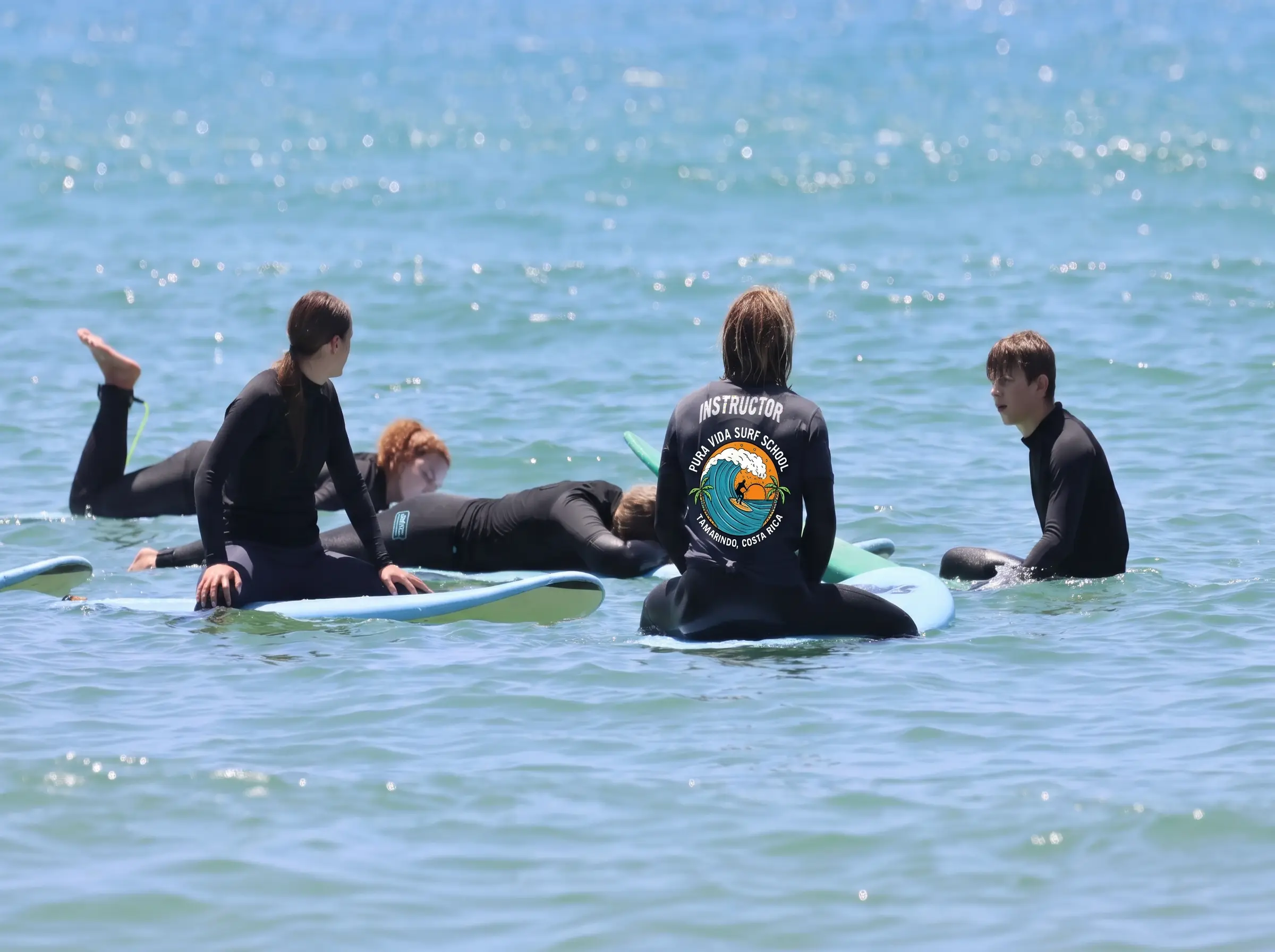
Most of our job is putting you in the right water at the right time, with someone watching you. Every lesson starts with a safety talk on the sand: rip currents, how to fall, how to hold the board. Our instructors are certified and stay in the water with you for the whole 90 minutes.
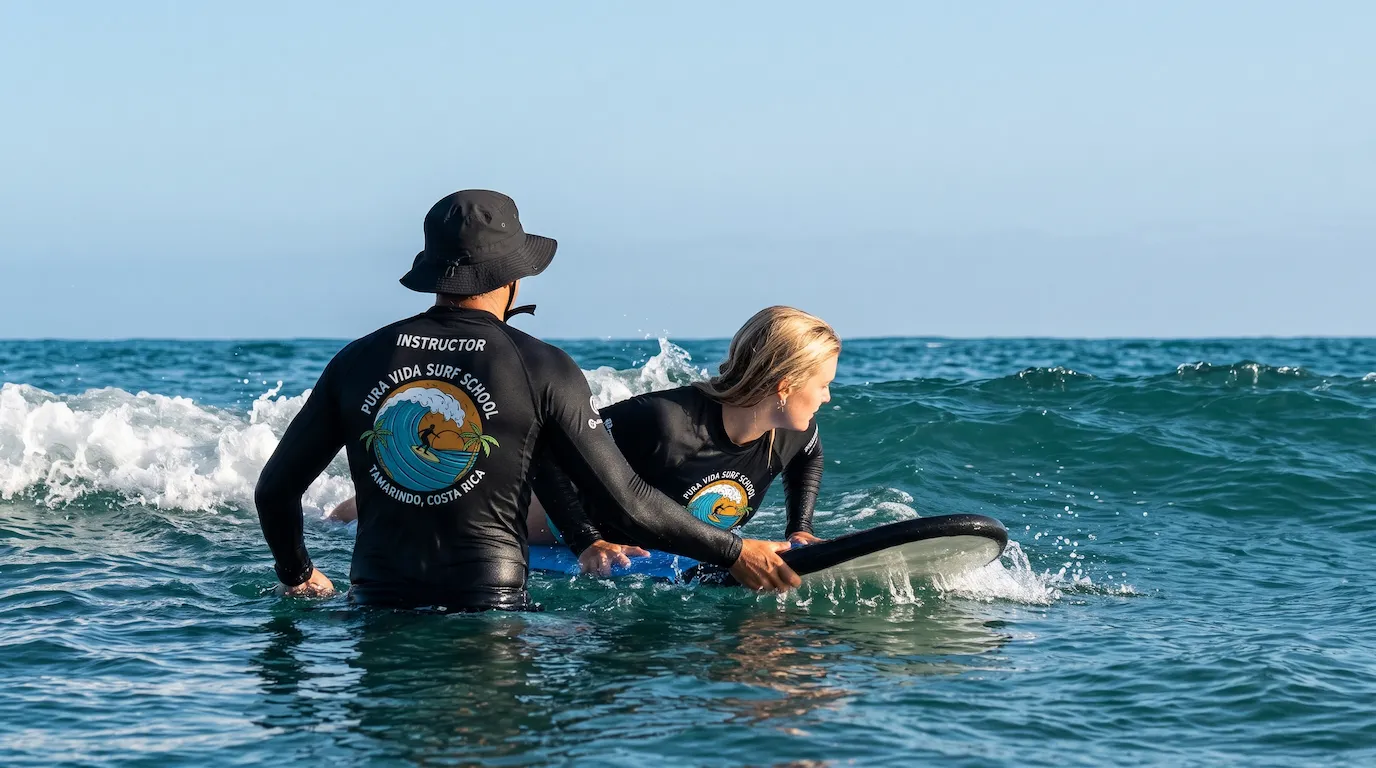
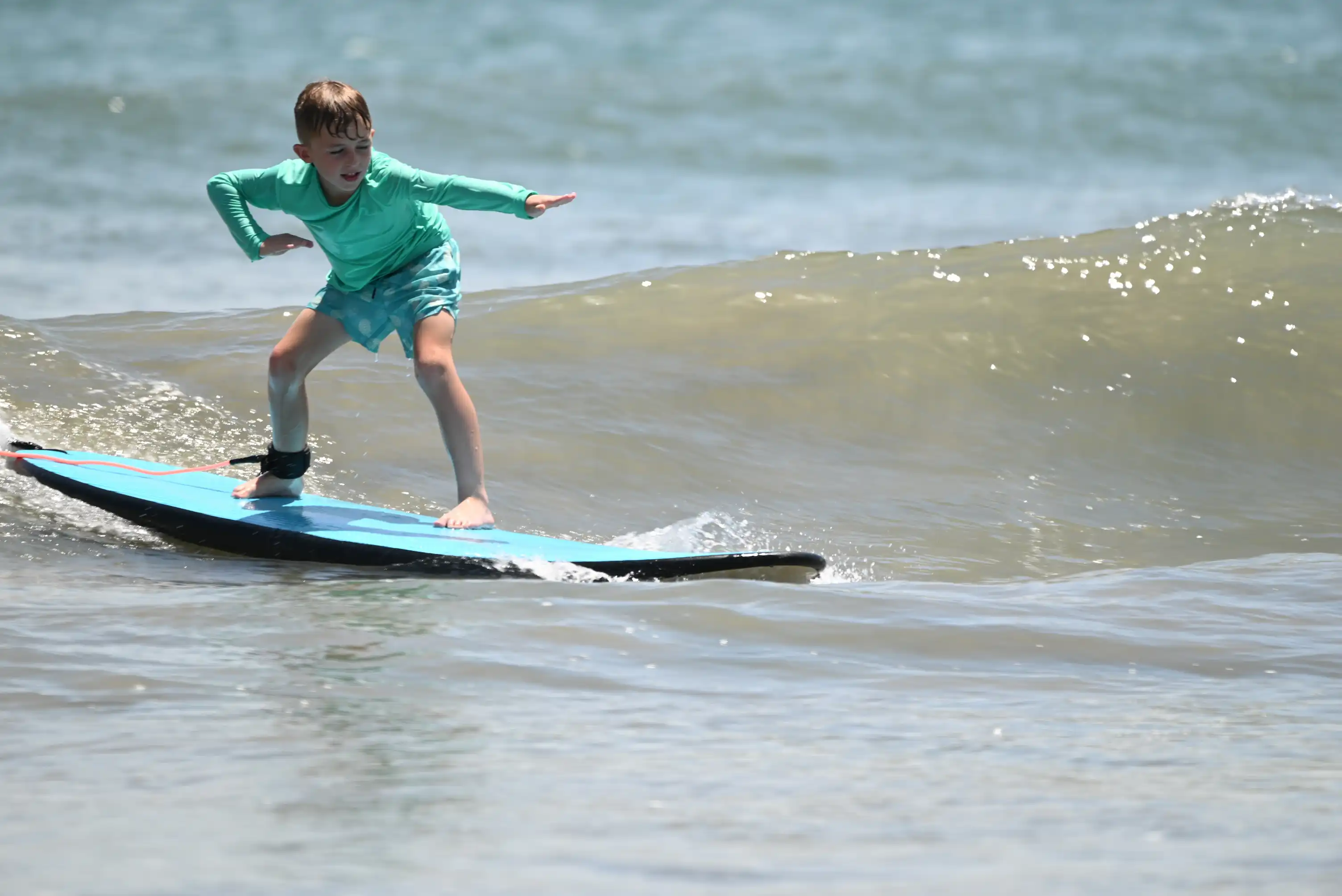
Group lessons have a maximum of 4 students per instructor, and semi-private and private lessons have fewer. We teach in waist-deep whitewater in the middle of the beach, away from the river mouth, and we time lessons to the tide rather than just the clock. Everyone gets a soft-top board and a leash. If the ocean isn’t safe that day, we reschedule you at no extra charge.
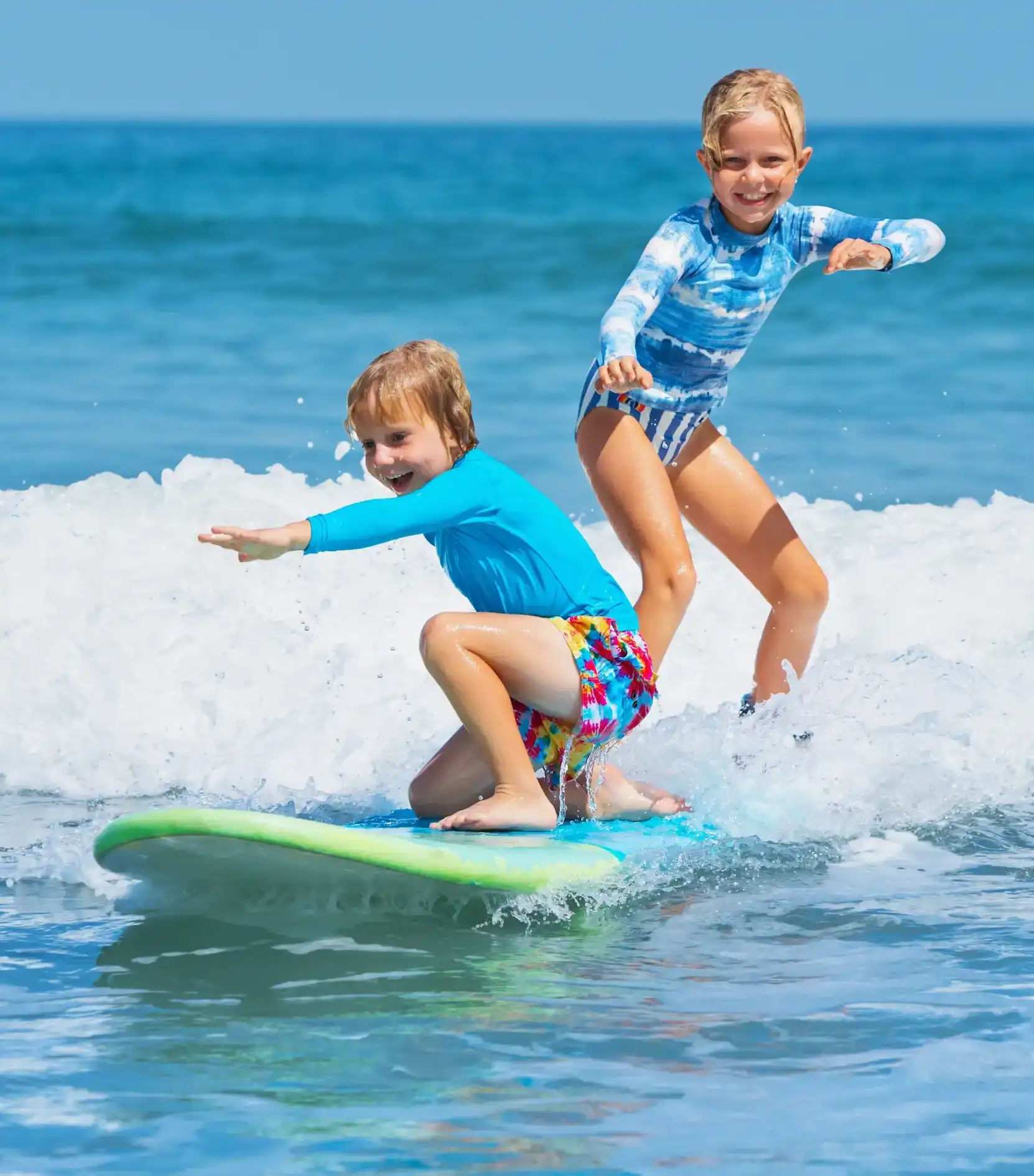
Kids from age 6 can join; our post on surfing with kids in Tamarindo explains what we do differently with them. If day one makes you nervous, read what to expect on your first surf lesson, or book one of our surf lessons in Tamarindo and let us read the water for you.
Learn With Someone Watching the Water
90-minute lessons in the calm part of Tamarindo beach, timed to the tide, with a certified instructor next to you. Stand up in your first lesson or your next one is free.