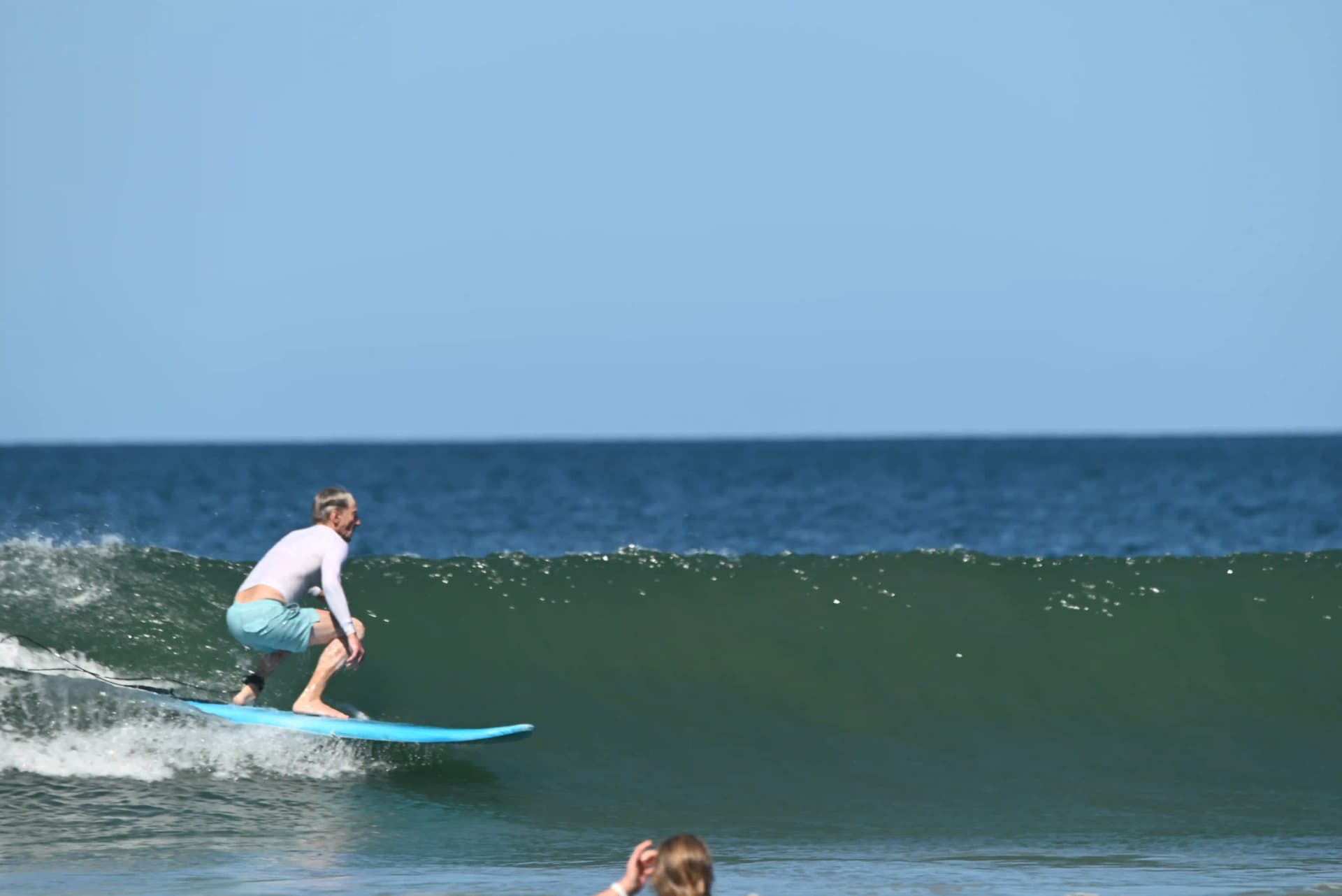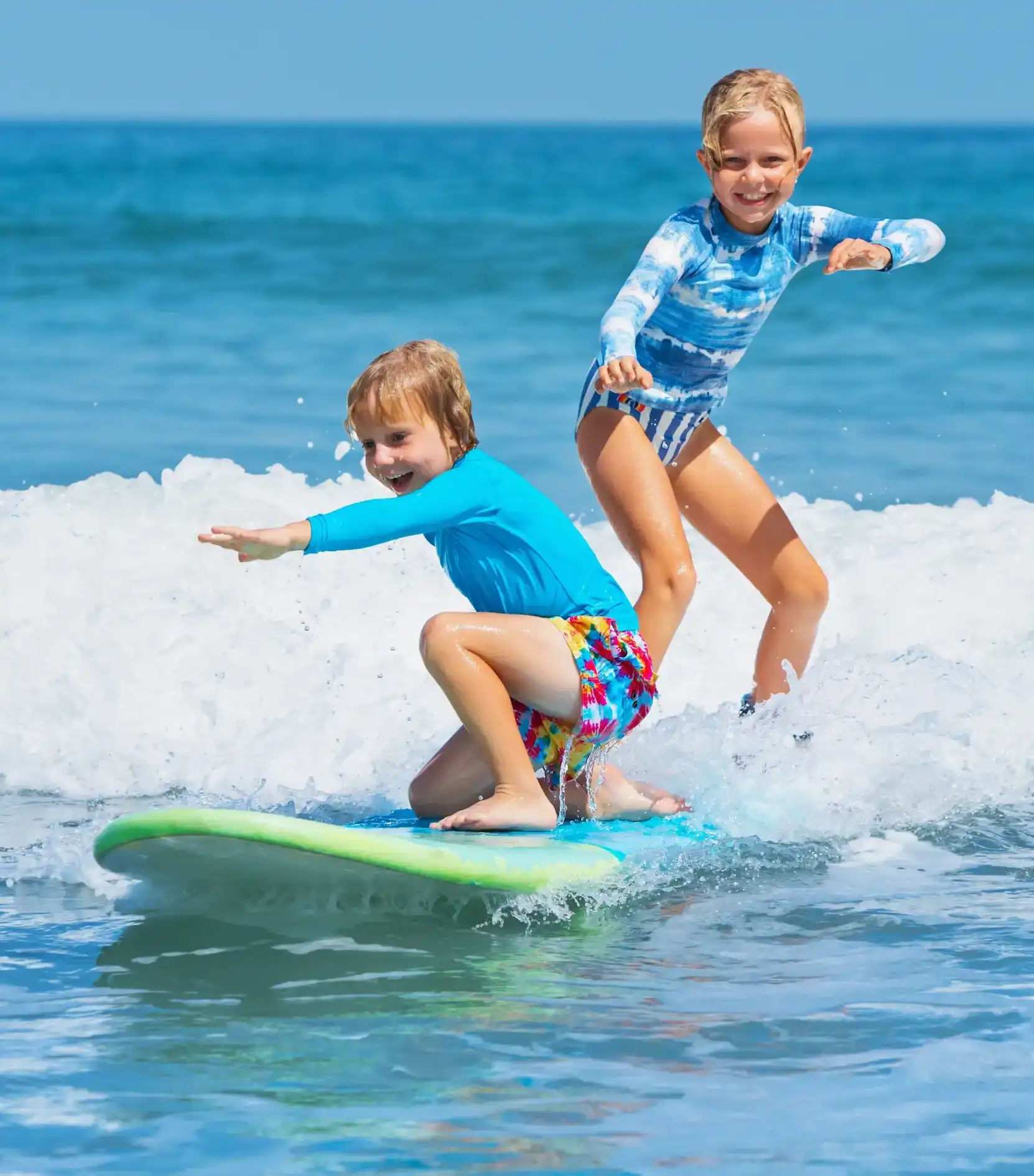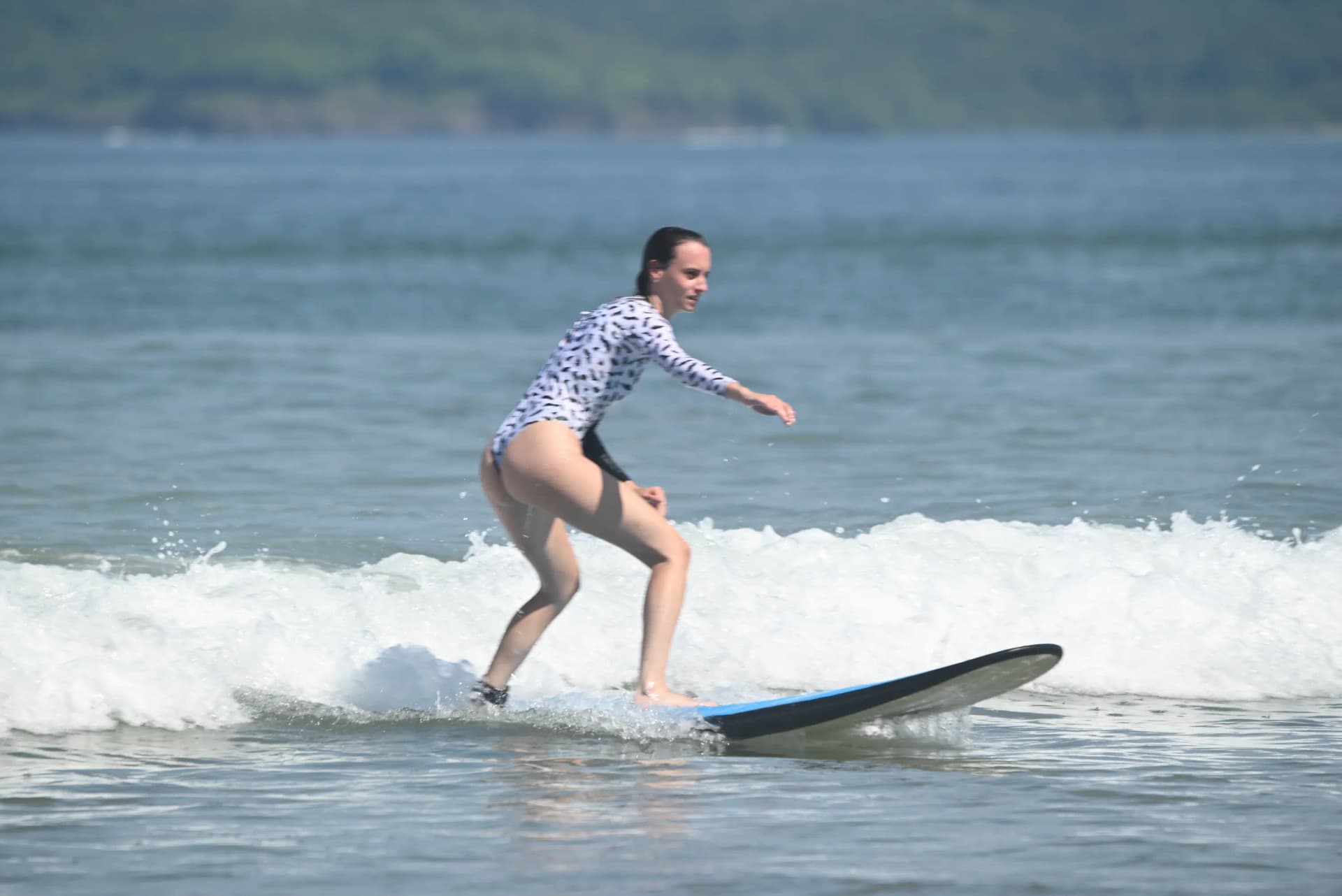

How many surf lessons does it take to learn to surf? Most beginners stand up in their first lesson, surf whitewater waves on their own after three to five lessons, and start catching unbroken green waves after a week or more of regular surfing. Those are typical numbers on a gentle beach like Tamarindo, with one 90-minute lesson a day.
The short version: 1 lesson to stand up. 3 to 5 lessons to catch and ride whitewater on your own. 6 or more lessons (about a week) to start on green waves. Beyond that, “learning to surf” is a skill you keep building for years, and that is the fun part.
“Learning to surf” means different things to different people, so the honest answer depends on the goal. Below is what each stage looks like, how many lessons it usually takes, and what makes people progress faster or slower.
What Does “Learning to Surf” Mean?
There are four milestones, and each one takes more time than the last. When people ask how long it takes, they usually mean one of these:
- Standing up on a board while a wave pushes you toward the beach.
- Surfing whitewater on your own: choosing a wave, paddling into it and standing up without the instructor’s push.
- Riding green waves: catching a wave before it breaks and riding along its face instead of straight to the beach.
- Surfing independently: paddling out, reading the sets and sharing the lineup safely, with no coach around.
Lessons Needed for Each Stage
| Stage | What you can do | Typical lessons |
|---|---|---|
| Stand up | Pop up and ride a pushed wave to the beach | 1 |
| Whitewater on your own | Pick, paddle into and ride broken waves alone | 3 to 5 |
| Green waves | Catch unbroken waves and start to angle along them | 6 or more (about a week) |
| Independent surfer | Paddle out, read sets, follow lineup etiquette | Several trips over months or years |
These are typical ranges, not promises. Fitness, age, ocean confidence and the conditions on the day all move them up or down.
Lesson 1: Standing Up
Most people stand up in their first lesson. A first lesson starts on the sand with safety, how to lie on the board and the pop-up, the move from lying down to standing. Then you go into waist-deep water, where the instructor helps you pick waves and gives you a push at the right moment.
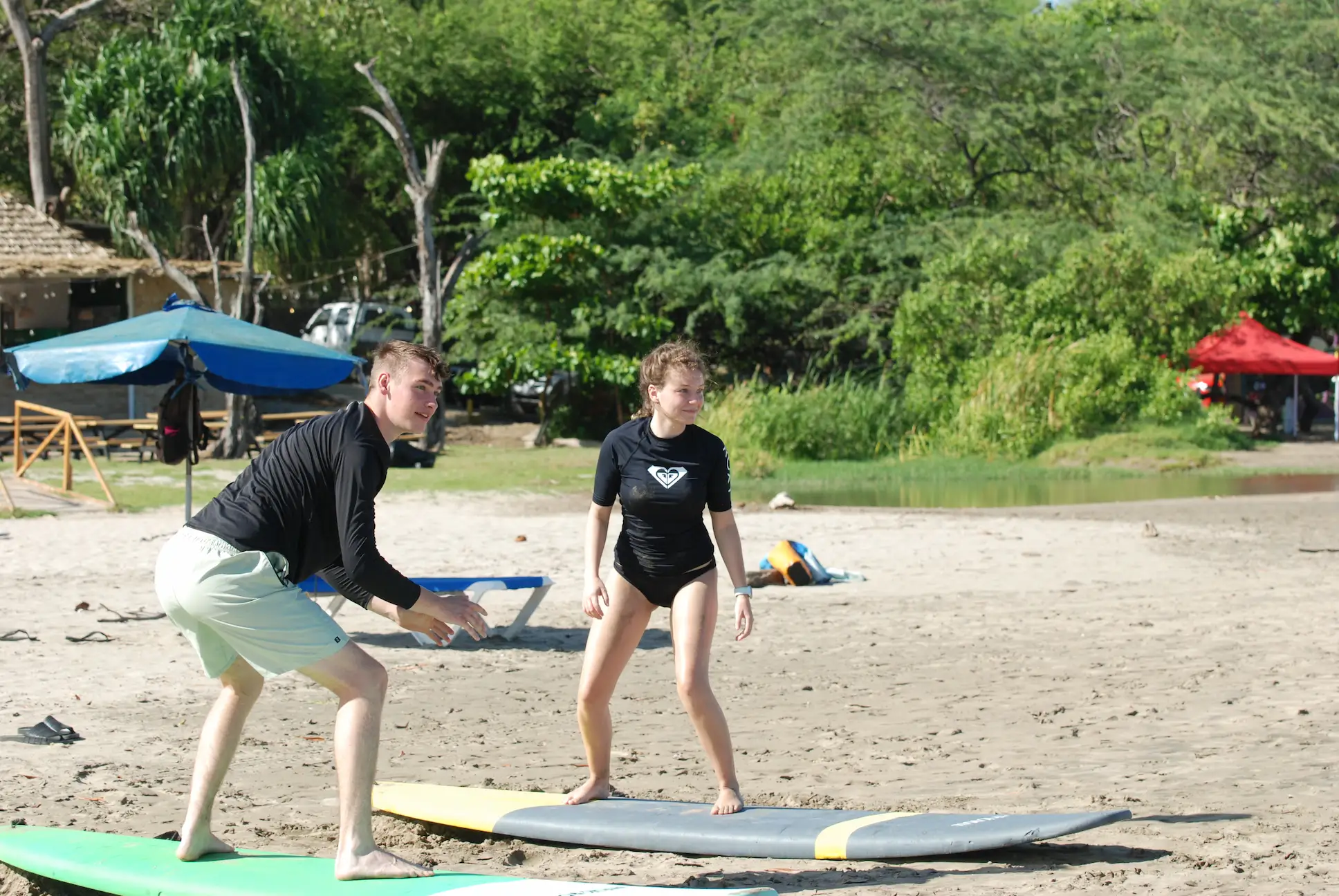
Big soft-top boards make this much easier than it looks: they are wide, stable and forgiving. We are confident enough in it that our surf lessons in Tamarindo come with a guarantee: stand up in your first lesson, or your next one is free. If you are nervous about day one, read what to expect on your first surf lesson.
Lessons 2 to 5: Surfing Whitewater on Your Own
This is where most of the learning happens. Standing up with a push is one skill. Doing it alone takes a handful more lessons, because you now need to:
- Read the whitewater and choose a wave you can actually catch.
- Paddle hard enough to match the wave’s speed, without the instructor’s push.
- Pop up in one move, with your feet in the right place and your eyes forward.
- Steer a little, by shifting your weight, so you can avoid other surfers.
By the end of lesson three to five, most beginners are catching and riding several whitewater waves per session on their own. The instructor’s role shifts from pushing you to fixing details.
Lesson 6 and Beyond: Green Waves
Riding unbroken waves usually starts after about a week of daily surfing. A green wave is faster and steeper than whitewater, so the timing of the paddle and the pop-up has to be sharper. You also need to paddle out past the breaking waves, which takes stamina.
This is where most beginners feel the biggest jump: instead of riding straight to the beach, you start to angle along the face of the wave. It is also why a full week works so well. We wrote a whole post on what to expect from learning to surf in a week.
What Makes People Learn Faster (or Slower)
The biggest factors are how often you surf, the wave you learn on and the board you ride.
- Consecutive days: lessons on back-to-back days build on each other. With a week between lessons, you spend the start of each one relearning the pop-up.
- A gentle wave: slow, crumbly waves over sand give you time to stand up. Tamarindo’s main beach is one of the best places for this in Costa Rica; see is Tamarindo good for beginner surfers.
- The right board: a long, wide soft-top catches waves easily. Switching to a small board too early slows everyone down.
- Coaching attention: the fewer students per instructor, the more feedback you get on each wave.
- Fitness and comfort in the ocean: paddling is the hardest part physically. Swimmers and active people usually progress faster, but neither is required to start.
- Tide and conditions: the same beach can be easy at one tide and hard at another. Instructors pick the time; if you surf alone, the Tamarindo tide chart helps.
How Many Lessons Should You Book?
For most beginners, three to five lessons on back-to-back days is the sweet spot. It is enough to go from your first pop-up to surfing whitewater on your own, which is when surfing starts to feel like your own thing.
- Just curious, or short on time: one lesson. You will stand up and find out if you love it.
- You want to surf on your own by the end of the trip: three to five lessons.
- You want to start on green waves: a full week, with a lesson every day.
All our lessons are 90 minutes, with the board, leash and rash guard included. Group lessons are $50 per person, semi-private $60 and private $90, plus 13% IVA; see how much surf lessons cost in Tamarindo for the full breakdown. If you already know you want several days, our surf packages bundle 3, 4 or 6 lessons over 3, 5 or 7 days at a lower price per lesson.
Start With One Lesson
90 minutes on Tamarindo's main beach, board and rash guard included. Stand up in your first lesson or your next one is free.